
B2B SEO for law firms, accountants and consultants in Malaysia
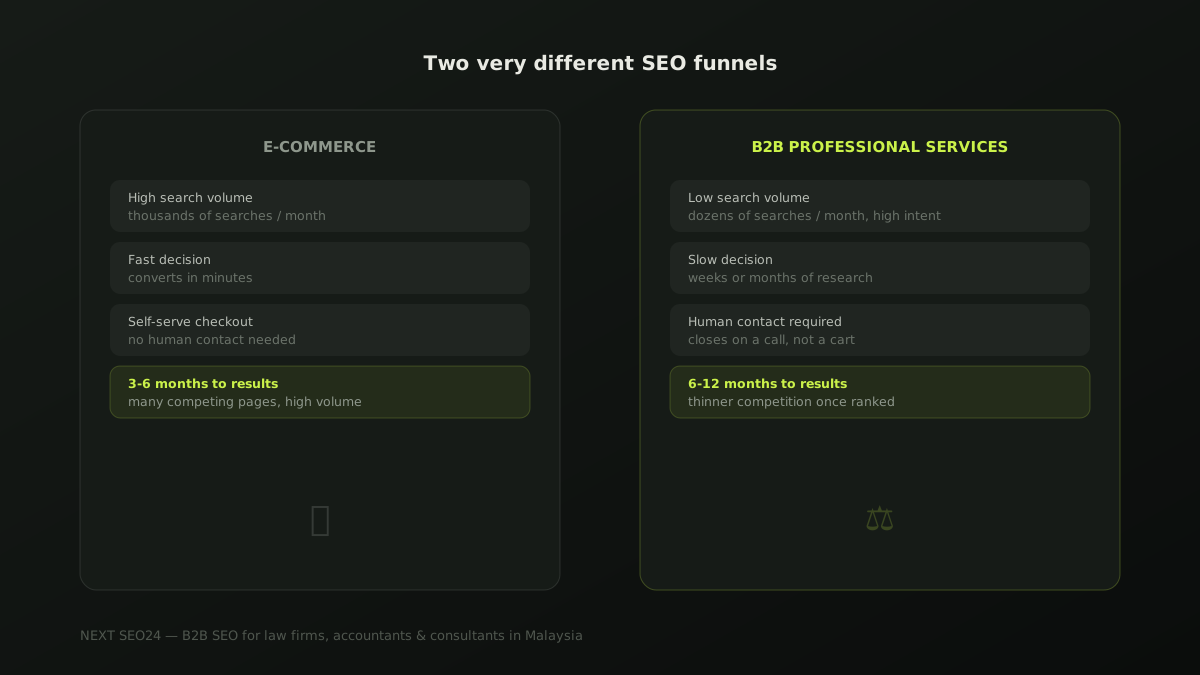
Most SEO advice is written for e-commerce: high search volume, fast decisions, a checkout page. A law firm, accounting practice or consultancy in Kuala Lumpur is working with the opposite — a handful of searches a month, a buyer who researches for weeks before ever making contact, and a sale that closes in a phone call, not a cart. Applying e-commerce SEO logic here wastes budget. Here's what actually works instead.
Why B2B professional-services SEO looks nothing like e-commerce SEO
An e-commerce keyword like "buy running shoes online" might get thousands of monthly searches and convert in minutes. A professional-services keyword like "employment lawyer for SME Kuala Lumpur" might get a few dozen searches a month across the whole country — and the person searching it is not buying today. They're building a shortlist. That changes almost every decision: which keywords to target, what content to write, and how to measure whether the SEO is working at all.
Keyword strategy: low volume, high intent
Don't chase volume — chase the specific phrase a real prospect types when they already know they need help. "Employment lawyer Kuala Lumpur SME" beats "employment law" every time, even with a fraction of the search volume, because it signals someone close to making a decision. We build these lists from the actual questions clients ask during intake calls, not from a keyword tool's suggestions — the tool tells you what's searched, not what converts.
- Service + situation, not service + city alone. "Company secretary for a Sdn Bhd startup" outperforms a generic "company secretary Malaysia" page because it matches a specific reader's actual stage of business.
- Problem-first queries. Prospects often search the problem before they know the service name — "how to terminate an employee legally in Malaysia" reaches someone earlier in the funnel than "employment lawyer."
- Comparison and vetting queries. "How to choose a corporate law firm in KL" or "questions to ask an accountant before hiring" capture buyers actively shortlisting — a stage e-commerce SEO rarely has to think about explicitly.
Content that actually builds trust with a B2B buyer
A generic "5 benefits of hiring an accountant" post convinces no one who's already decided they need one — they're evaluating who to trust with something expensive and consequential. What moves that decision is specific, practical detail that only someone who does the work could write: a real walkthrough of a process, the actual documents required, the mistakes that commonly cause delays. That specificity is also exactly what separates genuinely helpful content from the generic filler Google's Helpful Content system is built to demote.
The E-E-A-T bar is higher for legal and financial content
Legal and financial advice sits close to what Google treats as YMYL (Your Money or Your Life) content, where trust signals matter more than almost any other category. A real named author with visible, verifiable credentials, a genuine professional bio and consistent authorship across a firm's published content is not optional here — it's a baseline requirement. Our hands-on E-E-A-T guide to author pages and trust signals covers exactly how to implement this correctly, including working Person schema.
LinkedIn and Google: the two channels that actually matter
For professional services, LinkedIn and Google do different, complementary jobs rather than competing for the same attention. Google captures the moment someone actively searches for help — high intent, but a smaller audience. LinkedIn builds the awareness and credibility that makes a prospect search your firm by name later, or recognise it when it appears in results. A partner's LinkedIn post referencing the firm's own published guide, linking back to it, does double duty: real distribution now, and a durable page that keeps ranking after the post scrolls out of anyone's feed.
Local and national duality
A Kuala Lumpur corporate law firm usually needs to rank both locally — for clients who want to meet in person — and nationally, for the growing share of engagements handled remotely. That means a properly optimised Google Business Profile for the local searches, alongside content and service pages built to rank nationally for the specific practice areas the firm handles, not one generic "our services" page trying to do both jobs at once.
A realistic funnel and timeline
Expect 6-12 months before organic search becomes a reliable, repeatable source of enquiries — longer than most e-commerce timelines, because search volume per keyword is lower and the buying cycle is longer. The upside: once a firm ranks for its specific, high-intent terms, the competition for those same low-volume phrases tends to be much thinner than in consumer categories, and the leads that do arrive are usually far more qualified.
Frequently asked questions
How long does B2B SEO take compared to e-commerce SEO?
Longer, usually 6-12 months before leads become a reliable pattern rather than 3-6 months for e-commerce, because B2B search volume is lower per keyword and buyers research over weeks or months before making contact. The upside is that once a professional-services firm ranks for its core terms, competition for those low-volume, high-intent keywords is also much thinner.
Is content marketing worth it for a small law firm or accounting practice?
Yes, but only specific, practical content written by someone who actually does the work — not generic explainer posts. A single detailed article answering a real client question a partner gets asked repeatedly will usually outperform ten generic "introduction to X law" posts, both for ranking and for the trust it builds with a reader deciding who to call.
Should a professional-services firm run Google Ads while SEO builds up?
Often yes, for a defined period. Google Ads can generate leads immediately on a handful of high-intent terms while organic rankings build over months, giving the firm pipeline in the meantime. It's usually worth scaling back the ad spend, not eliminating it entirely, once organic traffic on those same terms becomes reliable.
Ready to build a lead pipeline that doesn't depend on ad spend?
Tell us about your practice area and target clients — we'll map out realistic keyword targets and a content plan built for how B2B buyers actually decide.
Chat on WhatsApp →