
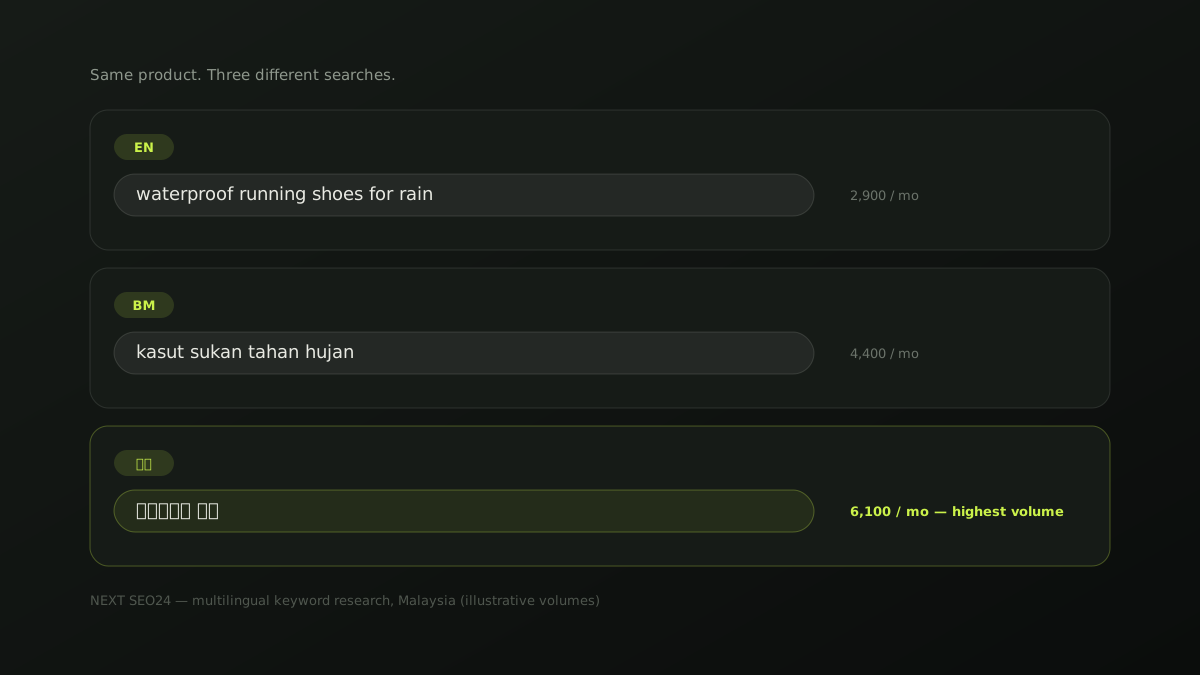
Keyword research for Malaysia: English, Bahasa Malaysia and Chinese
The most common keyword research mistake we see in Malaysia isn't a missing tool or a lazy process — it's assuming a translated keyword list is a researched one. Google Translate can tell you what a phrase means; it cannot tell you whether anyone actually searches it that way. Here is how to research each language segment properly.
Why one keyword list doesn't work for Malaysia
Malaysia's three main search languages behave like three separate, only partly overlapping markets. A term that dominates Chinese-language search can have negligible English volume, and vice versa. On top of that, Malaysians frequently mix languages within a single query — "kedai jam tangan near me" or "baju raya sale online" are completely normal search patterns that a single-language keyword list will never surface. Treating BM and Chinese as simple translations of your English list means missing a large share of real demand.
Where to actually find real search terms per language
- Keyword tools set to Malaysia, run separately per language. Google Keyword Planner and similar tools return meaningfully different suggestions when the seed term itself is typed in English vs Bahasa Malaysia vs Chinese — running one query per language surfaces terms a translated list never would.
- Autocomplete and "People also ask," typed natively. Open an incognito browser, set location to Malaysia, and type your seed terms directly in each language — the autocomplete suggestions and related questions that appear are real, current search behaviour.
- Your own customer messages. WhatsApp enquiries, Facebook comments and customer service chat logs are an underused goldmine — they show the exact words real Malaysian customers use, in whichever language they're most comfortable in, with zero research cost.
- Competitor content in each language. Read (or have a native speaker read) how competitors who genuinely rank in Chinese or Bahasa Malaysia search phrase their headings and product names — not to copy, but to calibrate real terminology.
Translation traps that quietly waste content budget
- Formal vs colloquial register. A textbook-correct Bahasa Malaysia phrase can be search-dead if real users search in a more casual, everyday register — and the reverse is also common for professional B2B terms.
- Brand-name vs generic-term preference. Some product categories are searched almost entirely by brand name in one language and by generic descriptor in another — content built around the wrong pattern won't match intent even with perfect grammar.
- Assuming volume transfers. A high-volume English term is not evidence the BM or Chinese equivalent has any meaningful volume at all — always verify each language independently rather than assuming proportional demand.
A practical process to build a three-language keyword map
Build one spreadsheet with a row per topic and columns for: the English term, the validated (not just translated) Bahasa Malaysia term, the validated Chinese term, search intent for each, and a notes column for volume or register differences you found. Research each language column independently using the methods above before filling it in — never populate a row by simply translating the English cell.
How to prioritize when resources are limited
Most small and mid-sized Malaysian businesses cannot realistically produce excellent content in all three languages at once, and thin, half-researched content in three languages underperforms solid content in one. Check where your actual current customers come from — existing enquiries, order data, social comments — and commit fully to that language segment first. Expand to a second and third language only once the first is genuinely working, rather than spreading effort evenly from day one.
If you'd like a second pair of eyes on your current keyword targeting across languages, send us your site and we'll flag where translated-not-researched keywords may be costing you visibility.
Frequently asked questions
Should I just translate my English keywords into Bahasa Malaysia and Chinese?
No. Direct translation frequently misses how people actually phrase a search — colloquial terms, mixed-language queries, and brand-vs-generic preferences differ by language segment. Always validate a translated term's real search volume rather than assuming it transfers.
Which language should a small Malaysian business prioritize first?
Whichever language your actual current customer base searches in — check your existing enquiries, WhatsApp messages and any analytics language data before guessing. One language done thoroughly outperforms three done thinly.
Do Malaysians really mix languages in a single search?
Yes, very commonly — a query like "kedai jam tangan near me" or "baju raya sale online" mixes Malay and English naturally. These mixed-language patterns often have meaningful search volume that a single-language keyword list misses entirely.
Not sure your keyword targeting matches how customers actually search?
Send us your website and we'll review your current keyword targeting across English, Bahasa Malaysia and Chinese — free, no obligation.
Chat on WhatsApp →