
Instagram, TikTok or Google — where do Malaysians actually search first?
"Gen Z searches on TikTok now, not Google" gets repeated so often it's become a marketing cliché — and like most clichés, it's a real trend stretched past what it actually means. Here's what's genuinely changed in how Malaysians discover businesses, what each platform is actually good at, and how to make SEO and social reinforce each other instead of treating them as competing budgets.
The real shift, without the exaggeration
Younger users genuinely do start certain searches on TikTok or Instagram rather than Google — mostly for visual, experience-led categories like restaurants, cafes, travel and beauty. That's a real behavior change worth planning for. It is not evidence that Google is being replaced: for transactional searches, comparison shopping, anything requiring a specific answer, and for the majority of age groups, Google remains the dominant starting point by a wide margin. Treat this as an additional discovery channel to win, not a wholesale platform migration to chase.
What each platform is actually good at finding
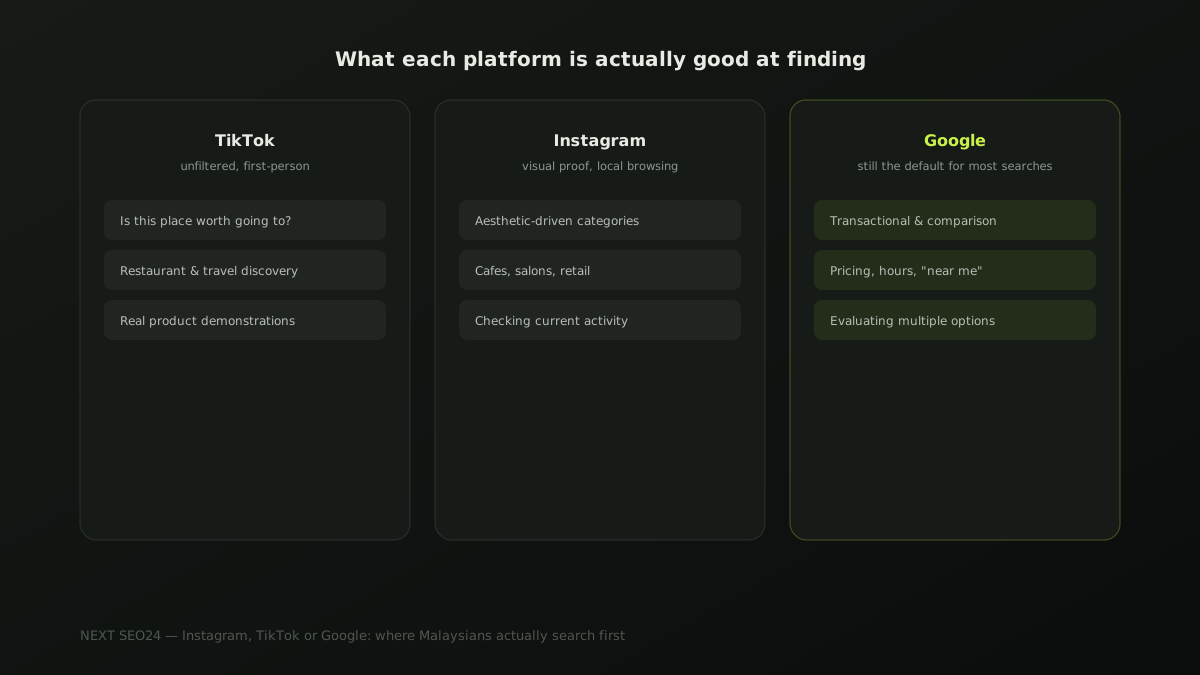
- TikTok: unfiltered, first-person reviews and how-it-actually-looks content — strongest for "is this place worth going to," restaurant and travel discovery, and product demonstrations.
- Instagram: visual proof and local browsing — strongest for aesthetic-driven categories (cafes, salons, retail) and for checking a business's current look and activity before visiting.
- Google: still the default for anything transactional, comparison-based, or requiring a specific factual answer — pricing, opening hours, "near me" searches, and any query where the searcher wants to evaluate multiple options at once.
Practical cross-optimization that actually works
The highest-value tactic isn't choosing one channel — it's reusing the same real assets correctly across both. A short-form video that performs well on TikTok or Reels usually represents genuine proof of quality; embedding it (or its best frames) on the relevant service or location page on your own website gives Google something concrete to index, while the social version drives discovery and awareness in parallel. Written captions and on-screen text should describe what's actually shown, in plain language matching how people search — that same descriptive language, reused as alt text and on-page copy, does double duty.
Google Business Profile photos vs Instagram photos: same asset, different job
Businesses frequently invest heavily in an Instagram feed while leaving a near-empty Google Business Profile — the exact asset most likely to be seen by a nearby customer actively deciding where to go right now. The fix isn't choosing one: shoot once, publish to both. A recent, genuine photo of the actual space, menu or product belongs on both platforms, and Google explicitly favors profiles with fresh, frequent photo uploads in how it ranks the Local Pack. For the full method on ranking there, see our Local SEO and Google Maps ranking guide for Malaysia.
Measuring what's actually driving revenue
Follower counts and view counts feel like progress but rarely map cleanly to leads or sales. Track instead what happens after the view: use a distinct link or a simple UTM-tagged URL in your social bio pointing to a specific landing page, and check in Google Analytics or Search Console whether branded search volume for your business name increases after a piece of content performs well — that's the clearest sign social activity is actually feeding real-world demand, including the Google searches that follow it.
Frequently asked questions
Is social search actually replacing Google for Malaysian businesses?
No, not replacing — supplementing, mainly for a specific type of query and a younger audience segment. Google still dominates transactional, comparison and informational searches across all age groups. TikTok and Instagram have grown as a starting point for visual, experience-based discovery like restaurants and local activities, particularly among younger users, but that's additive to Google's role, not a substitute for it.
Should a small business prioritize social media or SEO with a limited budget?
SEO first for most businesses, because it compounds and keeps working without ongoing content production, while social visibility mostly stops the moment you stop posting. That said, for visually-driven, discovery-led categories — cafes, salons, experiences — a modest, consistent social presence pays for itself quickly and should run alongside SEO from the start, not after.
Do TikTok and Instagram captions actually affect Google rankings?
Not directly — social posts themselves generally aren't indexed the way web pages are, and captions don't function as ranking signals on Google. The real crossover value is indirect: a genuinely popular piece of social content drives searches for your business name, and reusing the same asset (photos, video, description) properly on your website and Google Business Profile gives Google something real to index and rank.
Want SEO and social working together, not competing for budget?
Tell us about your business — we'll show you where your content should live twice and where it's wasted effort to try.
Chat on WhatsApp →