
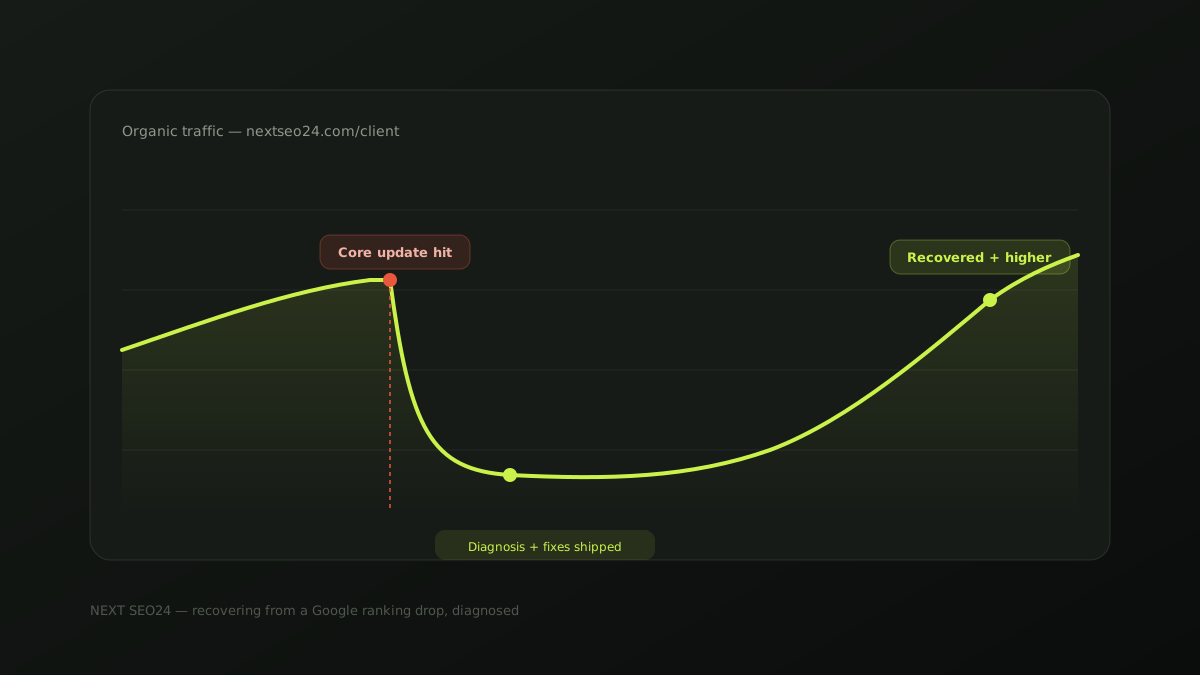
My Google rankings dropped overnight — how to diagnose and recover
A sudden ranking drop triggers panic, and panic leads to the wrong fixes — mass content deletion, reflexive disavow files, a full rewrite of pages that were never the problem. Work through this diagnostic in order before changing anything. Most drops have one identifiable cause, and guessing wrong wastes the weeks you need to actually fix it.
Step 1 — rule out the catastrophic, easy-to-check causes first
Before anything more complex, spend five minutes on the possibilities that are simple to confirm and simple to fix:
- Manual Actions and Security Issues in Search Console. These are shown explicitly — a manual action or hacked-site flag explains a drop instantly and needs a reconsideration request once resolved.
- An accidental noindex or robots.txt change. Check whether a recent deploy, plugin update or developer change quietly blocked the site or key pages from being crawled or indexed.
- Site errors or downtime. Server errors, an expired SSL certificate, or extended downtime around the time of the drop can cause Google to temporarily reduce crawl frequency and visibility.
Step 2 — is it site-wide, or specific pages and queries?
Open the Search Console Performance report and segment by page and by query, comparing the weeks immediately before and after the drop. A drop across nearly every page and query points to an algorithmic, technical or site-wide trust issue. A drop isolated to a handful of pages or one topic points to a content or competition problem specific to those pages — a competitor likely published something more thorough, or the content on those pages genuinely aged out of relevance.
Step 3 — check whether it lines up with a known Google update
Cross-reference the exact date of the drop against Google's Search Status Dashboard and industry SEO news. Timing matters more than it might seem — in March 2026, for example, a spam update starting 24 March and a core update starting just three days later on 27 March ran concurrently for around two weeks, producing unusually volatile rankings site-wide. In an overlap like that, it becomes genuinely hard to tell whether a drop was spam-related or quality-related from ranking movement alone, and the diagnostic steps below matter even more than usual.
Step 4 — technical health check
- Core Web Vitals regression. A recent redesign, a new plugin, or added third-party scripts can quietly push LCP or INP into "poor" territory.
- Indexing status changes. Compare the Coverage report's indexed-page count before and after the drop for an unexplained fall.
- Recent structural changes. A migration, URL restructure, or theme/CMS update in the weeks before the drop is often the real trigger, even if it wasn't intended to affect SEO.
Step 5 — content and trust quality check
Google's Helpful Content system is a site-wide signal folded into core ranking, not an occasional separate scan — a meaningful amount of thin or outdated content anywhere on the domain can hold down pages that are otherwise fine. Audit your lowest-performing pages honestly: are they thin, outdated, or duplicated elsewhere on the site? Also check authorship and trust signals — an author byline pointing to someone who left the company, or a company page with stale information, quietly undermines E-E-A-T site-wide.
What not to do while you're diagnosing
- Don't mass-delete content reflexively. Removing pages before you've confirmed they're actually the problem can cause a second, self-inflicted drop.
- Don't submit a disavow file on a hunch. The disavow tool is for confirmed, deliberate negative SEO or clearly toxic link patterns — not a general-purpose panic button, and misusing it can remove links that were helping you.
- Don't rewrite everything on the site at once. If you change content, technical setup and design simultaneously, you lose the ability to know what actually fixed — or worsened — the problem.
A realistic recovery timeline
Technical fixes — reversing an accidental noindex, fixing a crawl error, restoring uptime — can show improvement within days to a couple of weeks once Google recrawls the affected pages. Content and trust-related issues take longer, typically two to four months, because Google needs sustained evidence of quality before restoring confidence. If the drop was tied to a core update specifically, recovery sometimes only happens at the next core update rather than gradually in between — in that case, the right move is to fix the underlying quality gap thoroughly and treat the next update cycle as the checkpoint, not a fixed calendar date.
Frequently asked questions
How do I know if a ranking drop is from a Google algorithm update?
Check the date of the drop against Google's Search Status Dashboard, which lists confirmed update rollout windows. If your drop lines up exactly and other site owners in your industry report the same thing, it's very likely update-related rather than something specific to your site.
Should I disavow backlinks immediately after a ranking drop?
No, not reflexively. The disavow tool is for confirmed, deliberate negative SEO or genuinely toxic link patterns you can point to specifically. Disavowing normal backlinks on a hunch after a drop rarely helps and can occasionally remove links that were actually helping you.
Will my rankings ever fully recover after a core update?
Often, yes — but sometimes only at the next core update, not gradually in between. If the cause was a genuine quality gap, fixing it puts you in a strong position for the next update cycle rather than guaranteeing an immediate bounce-back.
Not sure why your rankings dropped?
Send us your Search Console access and we'll run this exact diagnostic on your site for free, and tell you plainly what we find.
Chat on WhatsApp →