
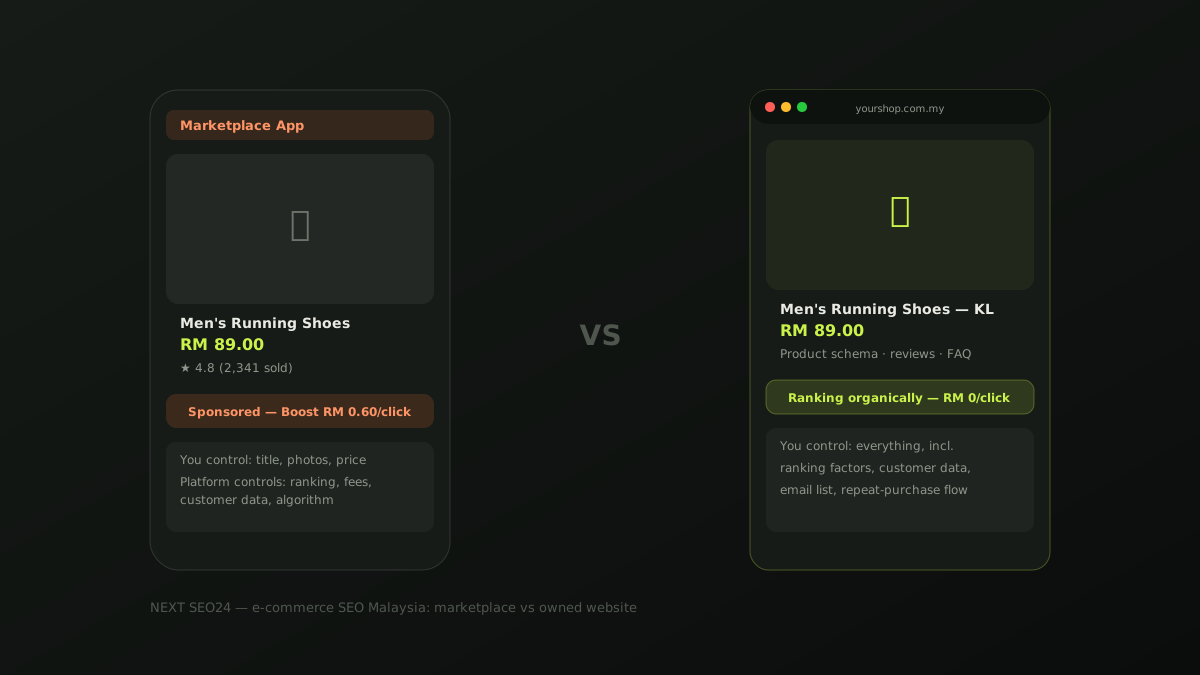
E-commerce SEO in Malaysia: Shopee/Lazada vs your own website
Almost every Malaysian seller we talk to asks a version of the same question: "I'm already on Shopee and Lazada — do I really need my own website too?" The honest answer is that marketplaces and an owned website solve different problems, and treating them as competing choices rather than complementary channels is the mistake that caps most sellers' growth.
How Shopee and Lazada actually rank your listing
Marketplace search is its own ranking system, separate from Google, and it rewards platform behaviour more than most sellers realise:
- Relevance matching. Product title, category placement and listing attributes matched against the exact search term — vague or keyword-thin titles lose visibility immediately.
- Sales velocity and conversion rate. Listings that convert well get pushed higher, which creates a compounding effect — early sales matter disproportionately.
- Review count, rating and response metrics. Both platforms weight seller responsiveness and review recency, not just the star average.
- Ad spend, increasingly. Organic-only visibility has narrowed on both platforms over the past few years — sponsored placement now occupies a growing share of top search results, which functionally raises the cost of relying on the marketplace alone.
What marketplaces are genuinely good for
Near-instant discovery in front of an enormous existing audience, built-in payment and logistics infrastructure, and buyer trust you don't have to earn from zero. For testing whether a product has real demand before investing in a full brand build-out, a marketplace listing is close to unbeatable.
What marketplace-only selling costs you long-term
- Commission on every sale, indefinitely. Unlike SEO, which compounds toward a lower cost-per-sale over time, marketplace commission never goes away.
- An ad-spend treadmill. As organic marketplace visibility narrows, staying visible increasingly requires ongoing ad spend just to maintain position, not to grow it.
- No ownership of customer data. You can't build an email list, run retargeting, or message past buyers directly — every repeat sale still costs you the same commission and, often, the same ad spend as a first-time buyer.
- No room for content that captures research-stage buyers. A marketplace listing can't rank for "best running shoes for flat feet Malaysia" — that search intent belongs to content, not product listings.
- Zero control over the rules. Commission rates, algorithm weighting and fee structures can change on the platform's schedule, not yours.
What an owned website adds that a marketplace listing never will
- Structured data for rich results.
Product,OfferandAggregateRatingschema let your price and star rating show directly in Google's results — something a marketplace listing URL almost never earns for your brand specifically. - Category and collection pages that target research intent. Pages built around "buying guide" and comparison queries capture shoppers earlier in their decision, before they've picked a specific product to search for on a marketplace.
- Compounding organic traffic at zero marginal cost per sale. Once a product or guide page ranks, it keeps sending free traffic — the opposite of commission and ad spend that scale with revenue.
- An owned customer relationship. Email capture, retargeting pixels and direct messaging turn a one-time buyer into a repeat customer without paying platform commission twice.
- Brand search growth. Every mention, review and piece of content builds toward people searching your brand name directly — the cheapest, highest-converting traffic there is, and something a marketplace shopfront can't accumulate on your behalf.
The hybrid approach that actually works for most Malaysian sellers
Keep marketplaces for volume and cash flow — they're not going away and shouldn't be abandoned. In parallel, invest gradually in your own website as a compounding, owned asset: start with your best-selling products, add genuine buying-guide content around them, and use real marketplace reviews and sales data to inform what to build next. Where it makes sense, gently direct marketplace buyers toward following your brand or joining an email list for restocks and new arrivals, so repeat purchases don't always cost you the same commission as the first one.
A starting checklist for your own site's product and category pages
- Unique product titles and descriptions — never copy-pasted directly from your marketplace listing
Product,OfferandAggregateRatingschema on every product page- Genuine customer reviews collected on-site, not just screenshots from the marketplace
- Category pages with real descriptive content, not just a product grid
- At least one buying-guide or comparison article per major product category
- Fast page load and clean mobile checkout — Malaysian shoppers are overwhelmingly mobile-first
If you're already selling on Shopee or Lazada and want to know exactly where to start building your own site's SEO, send us your marketplace shop link — we'll tell you which products are worth prioritising first.
Frequently asked questions
Should a new Malaysian seller start on Shopee/Lazada or build a website first?
Start on a marketplace to validate demand and generate early cash flow with minimal setup cost. Begin building your own website in parallel once you have consistent sales, so the SEO investment has real product-market fit data behind it rather than guessing.
Can my own website actually outrank Shopee or Lazada on Google?
For broad category terms, rarely — marketplaces have far more domain authority. But for specific product searches, branded searches, and informational buying-guide content, a well-optimized website regularly outranks marketplace listings, because marketplace category pages aren't built to target that kind of search intent.
Is it worth paying for Shopee/Lazada ad boosts if I also have a website?
Usually yes for the marketplace channel itself, since organic-only visibility there has become limited. Treat marketplace ad spend and website SEO as two separate budgets serving two different jobs — one buys visibility rented by the platform, the other builds an asset you own.
Selling on marketplaces and ready to build owned traffic?
Send us your Shopee or Lazada shop link — we'll review your top products and show you exactly where your own website's SEO would pay off first. No obligation.
Chat on WhatsApp →